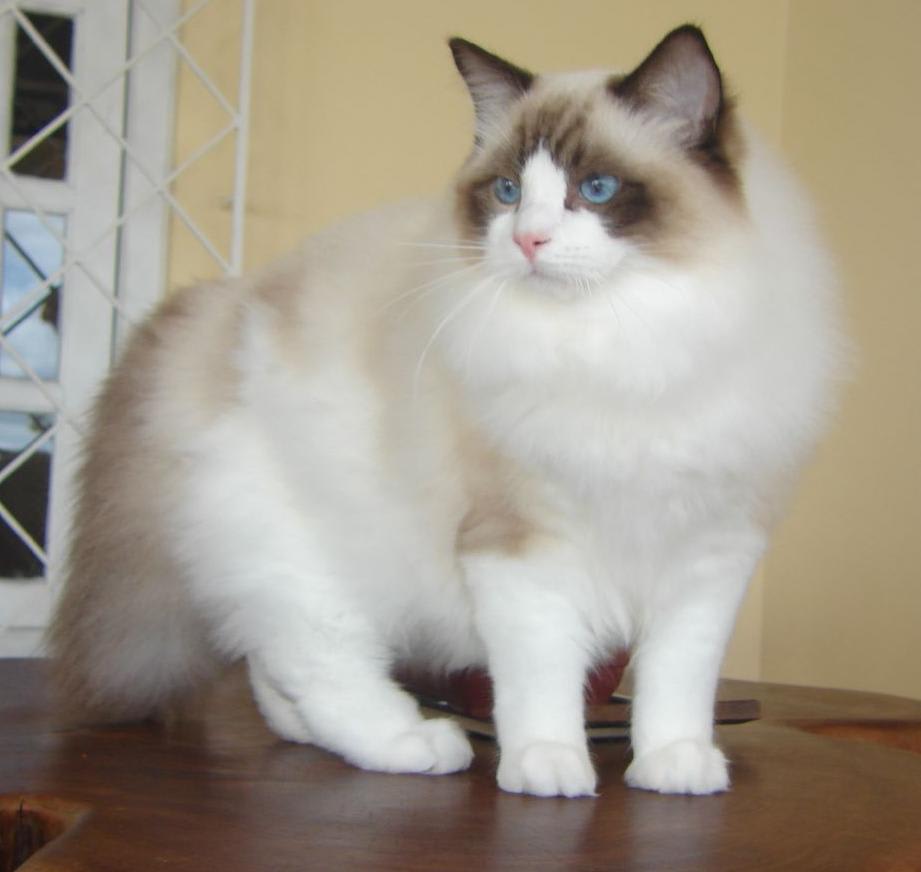
Photo: Simone Johnsson, CC BY-SA 2.0, via Wikimedia Commons
Cat breed guide
Ragdoll
A large, blue-eyed, semi-long-haired cat known for going limp and relaxed when picked up.
Published by Admin · Updated
- Size
- large
- Weight
- 10–20 lb
- Lifespan
- 12–15 years
- Docile
- Affectionate
- Relaxed
At a glance: Large (10 to 20 lb) · Low to moderate energy · Kids and other pets: usually excellent · 12 to 15 years · Grooming: brush twice a week
Temperament
Ragdolls are gentle, people-oriented cats that often greet their owners at the door and follow them from room to room. They are known for their relaxed nature and tend to be tolerant with children and other pets. Most prefer staying close to the ground rather than climbing to the highest shelf.
Daily life
Ragdolls enjoy gentle play, company and a predictable routine. Their silky coat has little undercoat, so it tangles less than some long-haired breeds, but brushing twice a week keeps it in good condition. Because they are so trusting, they are usually kept as indoor cats or given safe, enclosed outdoor access.
Health to watch
The breed can be prone to hypertrophic cardiomyopathy and urinary problems such as bladder stones, and their laid-back nature makes weight gain a risk. Keep your cat lean, encourage play and water intake, and ask about heart screening. Regular vet checks are important.
Rescue note
Ragdolls do appear in breed rescues and general shelters. They suit adopters who are home often and want a calm, affectionate companion.
General information, not veterinary advice.
Health notes
The breed can be prone to hypertrophic cardiomyopathy and urinary problems such as bladder stones, and their laid-back nature makes weight gain a risk. Keep your cat lean, encourage play and water intake, and ask about heart screening. Regular vet checks are important.
Ragdoll FAQ
Why are they called Ragdoll cats?
The name comes from the breed's tendency to relax and go limp, like a rag doll, when picked up.
Are Ragdolls good with children and dogs?
Usually yes. Ragdolls are known for being gentle and tolerant, and many live happily with respectful children and cat-friendly dogs.
How big do Ragdoll cats get?
Adult Ragdolls typically weigh about 10 to 20 lb (roughly 5 to 9 kg), with males usually larger. They can take up to four years to reach full size.
What health problems do Ragdolls have?
They can be prone to hypertrophic cardiomyopathy, urinary problems and weight gain. This is general information, not veterinary advice — ask your vet about your own cat.