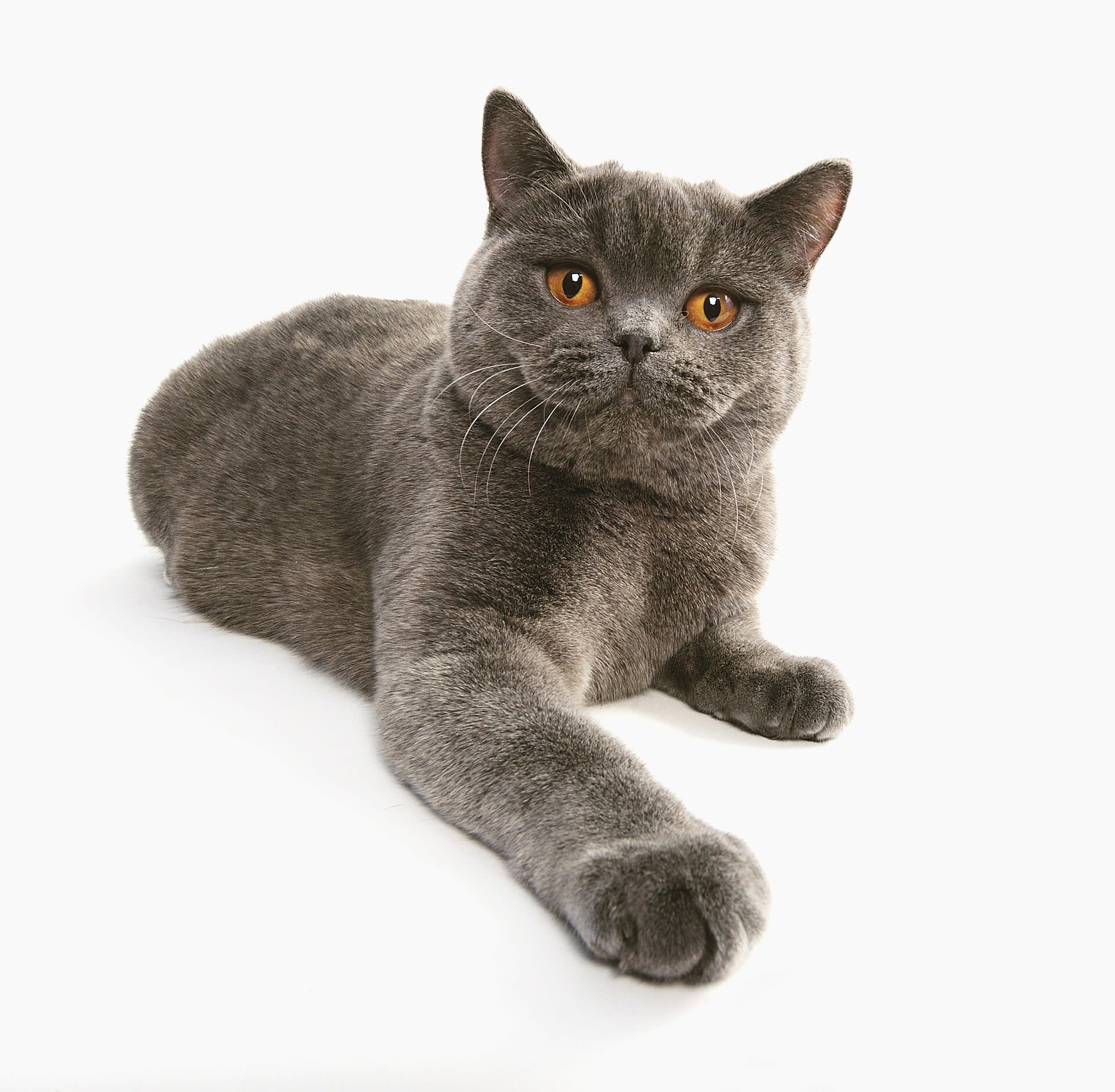
Photo: BritishEmpire, CC BY-SA 3.0, via Wikimedia Commons
Cat breed guide
British Shorthair
A sturdy, round-faced, plush-coated cat with a calm, undemanding and quietly affectionate nature.
Published by Admin · Updated
- Size
- medium
- Weight
- 9–17 lb
- Lifespan
- 12–17 years
- Calm
- Easy-going
- Dignified
At a glance: Medium to large (9 to 17 lb) · Low energy · Kids and other pets: good · 12 to 17 years · Grooming: weekly brush
Temperament
The British Shorthair is one of Britain's oldest and most popular breeds, best known in its blue-grey colour. These cats are calm, independent and loyal, happy to sit beside you rather than on you. They are generally quiet and adapt well to family life and to being indoors.
Daily life
A weekly brush is usually enough for the dense, plush coat, with extra grooming when they shed in spring and autumn. British Shorthairs are not very active, so encourage movement with short play sessions and puzzle feeders. Measure meals carefully, because the breed gains weight easily.
Health to watch
The breed can be prone to hypertrophic cardiomyopathy and, in some lines, polycystic kidney disease, and obesity is a common problem. Keep your cat at a healthy weight, ask about health testing and see your vet for regular checks.
Rescue note
British Shorthairs and their crosses occasionally need new homes through breed rescues. They suit people who want a calm, low-maintenance companion.
General information, not veterinary advice.
Health notes
The breed can be prone to hypertrophic cardiomyopathy and, in some lines, polycystic kidney disease, and obesity is a common problem. Keep your cat at a healthy weight, ask about health testing and see your vet for regular checks.
British Shorthair FAQ
Are British Shorthairs affectionate?
Yes, in a quiet way. They are loyal and enjoy being near their people, but many prefer sitting beside you to being carried or held.
Do British Shorthairs need much grooming?
No. A weekly brush is usually enough, with a little extra during seasonal shedding.
How long do British Shorthairs live?
British Shorthairs typically live about 12 to 17 years with good care and a healthy weight.
What health problems do British Shorthairs have?
They can be prone to hypertrophic cardiomyopathy, polycystic kidney disease in some lines, and obesity. This is general information, not veterinary advice — ask your vet about your own cat.