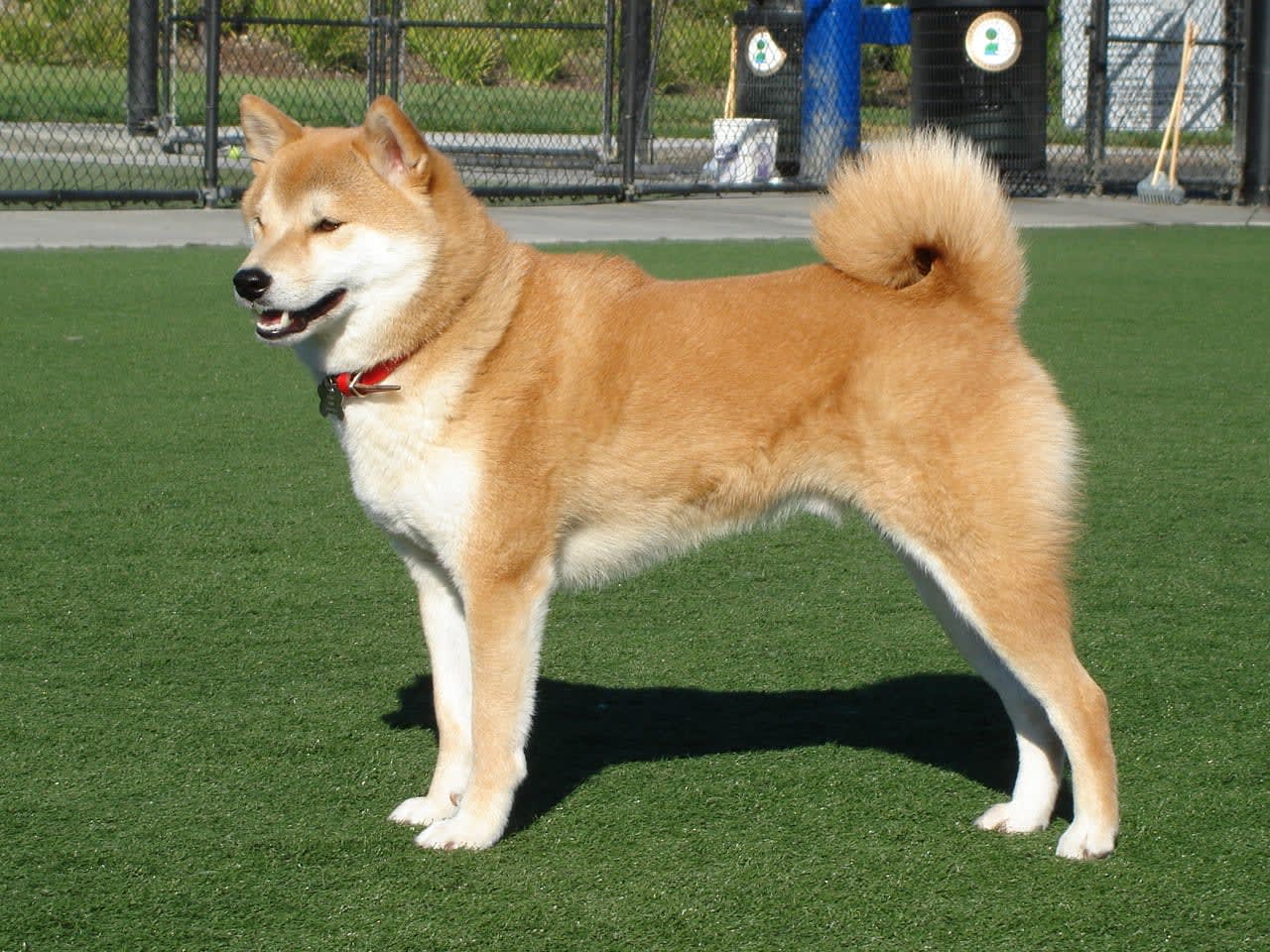
Photo: Takashiba at English Wikipedia, Public domain, via Wikimedia Commons
Breed guide
Shiba Inu
A compact, fox-like Japanese breed that is clean, confident and famously strong-willed.
Published by Admin · Updated
- Size
- small
- Weight
- 17–23 lb
- Height
- —
- Lifespan
- 12–15 years
- Independent
- Alert
- Spirited
At a glance: Small (17 to 23 lb) · Active · Kids: with supervision · 12 to 15 years · Grooming: brush weekly, heavy seasonal shedding
Temperament
The Shiba is a small hunting dog from Japan with a big, independent personality. It is clean, curious and attached to its family but not clingy, and it often prefers its own agenda. Shibas can be reserved with strangers and with other dogs, so early socialisation is important.
Daily life
Give a Shiba daily walks and play, and keep it on a lead or in a secure space, because a strong prey drive and an unreliable recall make off-lead freedom risky. Training works best with short, varied sessions and high-value treats. They are escape artists, so check fences and gates regularly.
Health to watch
Allergies, eye conditions such as glaucoma, a slipping kneecap and hip problems are seen in the breed. Their thick double coat sheds heavily twice a year, so be ready for plenty of brushing. Avoid overheating in summer and keep vaccinations and parasite prevention up to date.
Rescue note
Shibas are often surrendered by owners who expected a more eager-to-please dog. Patient adopters who respect the breed's independence tend to do best.
General information, not veterinary advice.
Health notes
Allergies, eye conditions such as glaucoma, a slipping kneecap and hip problems are seen in the breed. Their thick double coat sheds heavily twice a year, so be ready for plenty of brushing. Avoid overheating in summer and keep vaccinations and parasite prevention up to date.
Shiba Inu FAQ
How big does a Shiba Inu get?
Adult Shiba Inus typically weigh about 17 to 23 lb (roughly 8 to 10 kg), depending on the individual dog, its sex and its build.
How long do Shiba Inus live?
Shiba Inus typically live about 12 to 15 years. Good veterinary care, a healthy weight, exercise and genetics all play a part.
How much exercise does a Shiba Inu need?
Give a Shiba daily walks and play, and keep it on a lead or in a secure space, because a strong prey drive and an unreliable recall make off-lead freedom risky. Training works best with short, varied sessions and high-value treats.
What health problems should I watch for in a Shiba Inu?
Allergies, eye conditions such as glaucoma, a slipping kneecap and hip problems are seen in the breed. Their thick double coat sheds heavily twice a year, so be ready for plenty of brushing. This is general information, not veterinary advice — ask your vet about your own dog.