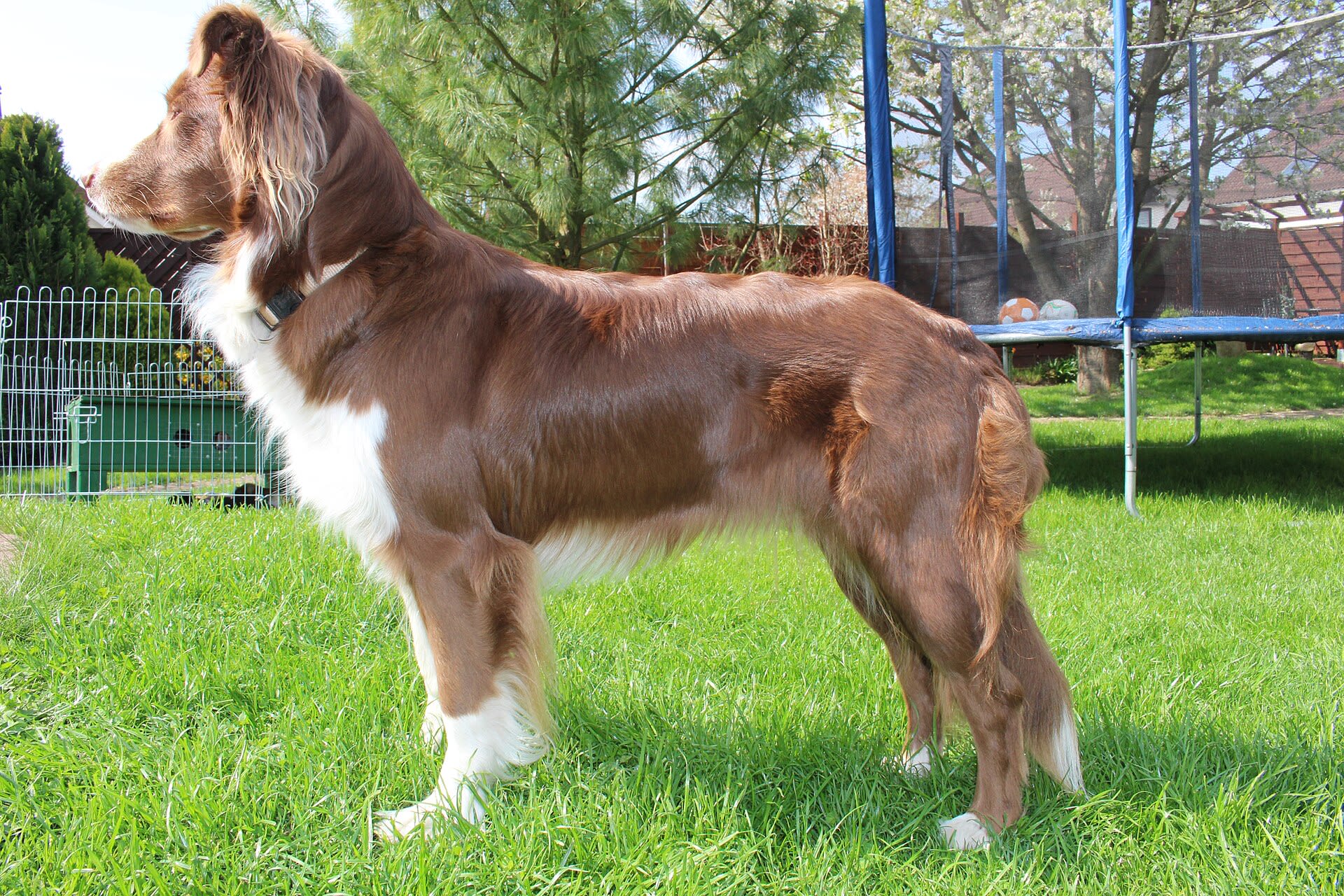
Photo: Trickdog-Fina, CC BY-SA 3.0, via Wikimedia Commons
Breed guide
Australian Shepherd
A smart, loyal ranch herding dog that needs a real job and a lot of activity.
Published by Admin · Updated
- Size
- medium
- Weight
- 40–65 lb
- Height
- —
- Lifespan
- 12–15 years
- Smart
- Loyal
- Eager to work
At a glance: Medium (40 to 65 lb) · High energy · Kids: with supervision · 12 to 15 years · Grooming: weekly brushing, heavy seasonal shedding
Temperament
Despite the name, the Aussie was developed in the United States as a ranch herding dog. It is smart, loyal and eager to work, and it often bonds closely to one person or one family. Strangers may get a reserved welcome.
Daily life
Plan on at least one to two hours of real activity a day, plus mental work such as training games, agility or scent games. A bored Aussie invents jobs, which can mean nipping at heels or herding children. A securely fenced yard helps, but it does not replace exercise.
Health to watch
Hip dysplasia, eye conditions such as cataracts, epilepsy, and the MDR1 gene variant, which makes some herding-breed dogs sensitive to certain drugs. Ask your vet about testing. Breeding two merle-coated dogs together can cause deafness and blindness in puppies.
Rescue note
Many Aussies are surrendered as adolescents by families who wanted a pet but not a full-time project. They suit active adopters who enjoy training.
General information, not veterinary advice.
Health notes
Hip dysplasia, eye conditions such as cataracts, epilepsy, and the MDR1 gene variant, which makes some herding-breed dogs sensitive to certain drugs. Ask your vet about testing. Breeding two merle-coated dogs together can cause deafness and blindness in puppies.
Australian Shepherd FAQ
How big does a Australian Shepherd get?
Adult Australian Shepherds typically weigh about 40 to 65 lb (roughly 18 to 29 kg), depending on the individual dog, its sex and its build.
How long do Australian Shepherds live?
Australian Shepherds typically live about 12 to 15 years. Good veterinary care, a healthy weight, exercise and genetics all play a part.
How much exercise does a Australian Shepherd need?
Plan on at least one to two hours of real activity a day, plus mental work such as training games, agility or scent games. A bored Aussie invents jobs, which can mean nipping at heels or herding children.
What health problems should I watch for in a Australian Shepherd?
Hip dysplasia, eye conditions such as cataracts, epilepsy, and the MDR1 gene variant, which makes some herding-breed dogs sensitive to certain drugs. Ask your vet about testing. This is general information, not veterinary advice — ask your vet about your own dog.