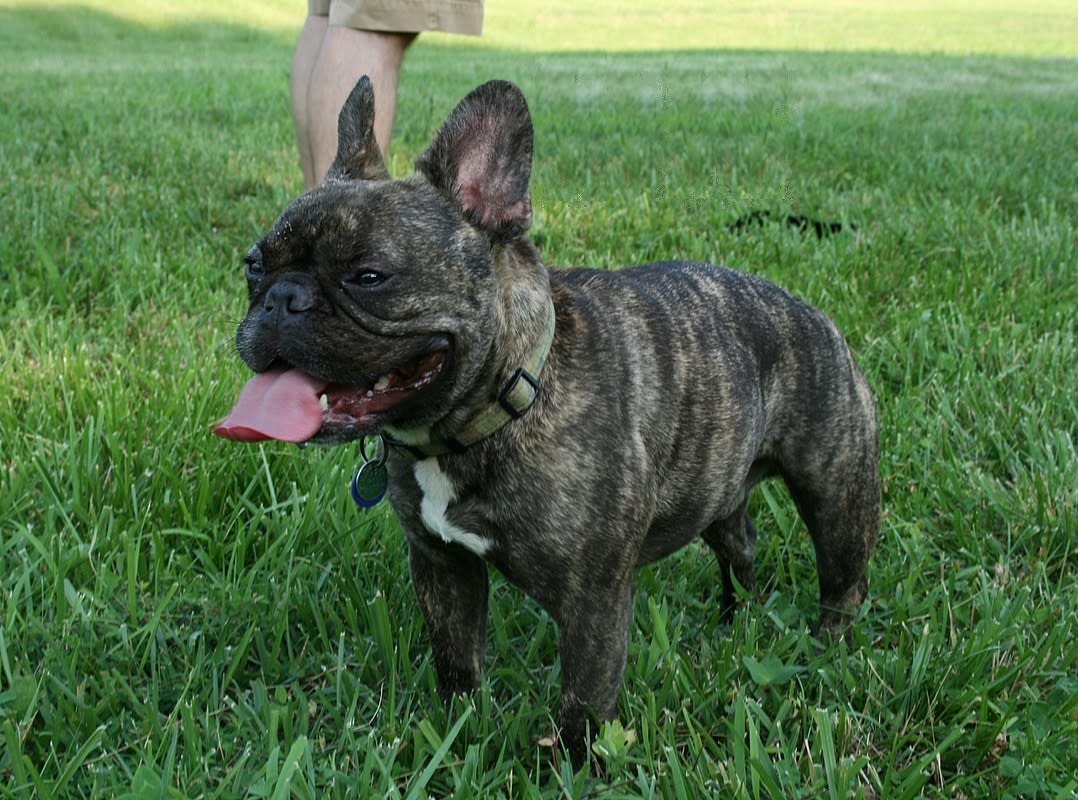
Photo: Ildar Sagdejev (Specious), CC BY-SA 4.0, via Wikimedia Commons
Breed guide
French Bulldog
A playful, affectionate flat-faced companion that suits flats — but needs heat and breathing care.
Published by Admin · Updated
- Size
- small
- Weight
- 16–28 lb
- Height
- —
- Lifespan
- 10–12 years
- Playful
- Affectionate
- Clownish
At a glance: Small (under 28 lb) · Moderate energy · Kids: yes · 10 to 12 years · Grooming: low, with regular skin-fold cleaning
Temperament
French Bulldogs are playful, affectionate and clownish. They are usually friendly with children and other dogs, and they do not need a lot of exercise, which makes them popular in flats.
Daily life
Keep walks short and in cool hours, because their flat faces make it hard to cool down. Avoid heat, hard exercise and humid weather, and never leave a Frenchie in a parked car. Use a harness, not a collar. Wipe the facial folds dry to prevent skin infections. Many snore and snort.
Health to watch
Brachycephalic airway syndrome (breathing difficulty), spinal problems, skin-fold infections, allergies, eye problems and heat stroke. Vet bills can be high, so consider insurance or a savings plan.
Rescue note
Frenchies are often surrendered when owners did not expect the cost of breathing and skin care. An adopter with air conditioning and a vet budget gives them the best chance.
General information, not veterinary advice.
Health notes
Brachycephalic airway syndrome (breathing difficulty), spinal problems, skin-fold infections, allergies, eye problems and heat stroke. Vet bills can be high, so consider insurance or a savings plan.
French Bulldog FAQ
How big does a French Bulldog get?
Adult French Bulldogs typically weigh about 16 to 28 lb (roughly 7 to 13 kg), depending on the individual dog, its sex and its build.
How long do French Bulldogs live?
French Bulldogs typically live about 10 to 12 years. Good veterinary care, a healthy weight, exercise and genetics all play a part.
How much exercise does a French Bulldog need?
Keep walks short and in cool hours, because their flat faces make it hard to cool down. Avoid heat, hard exercise and humid weather, and never leave a Frenchie in a parked car.
What health problems should I watch for in a French Bulldog?
Brachycephalic airway syndrome (breathing difficulty), spinal problems, skin-fold infections, allergies, eye problems and heat stroke. Vet bills can be high, so consider insurance or a savings plan. This is general information, not veterinary advice — ask your vet about your own dog.