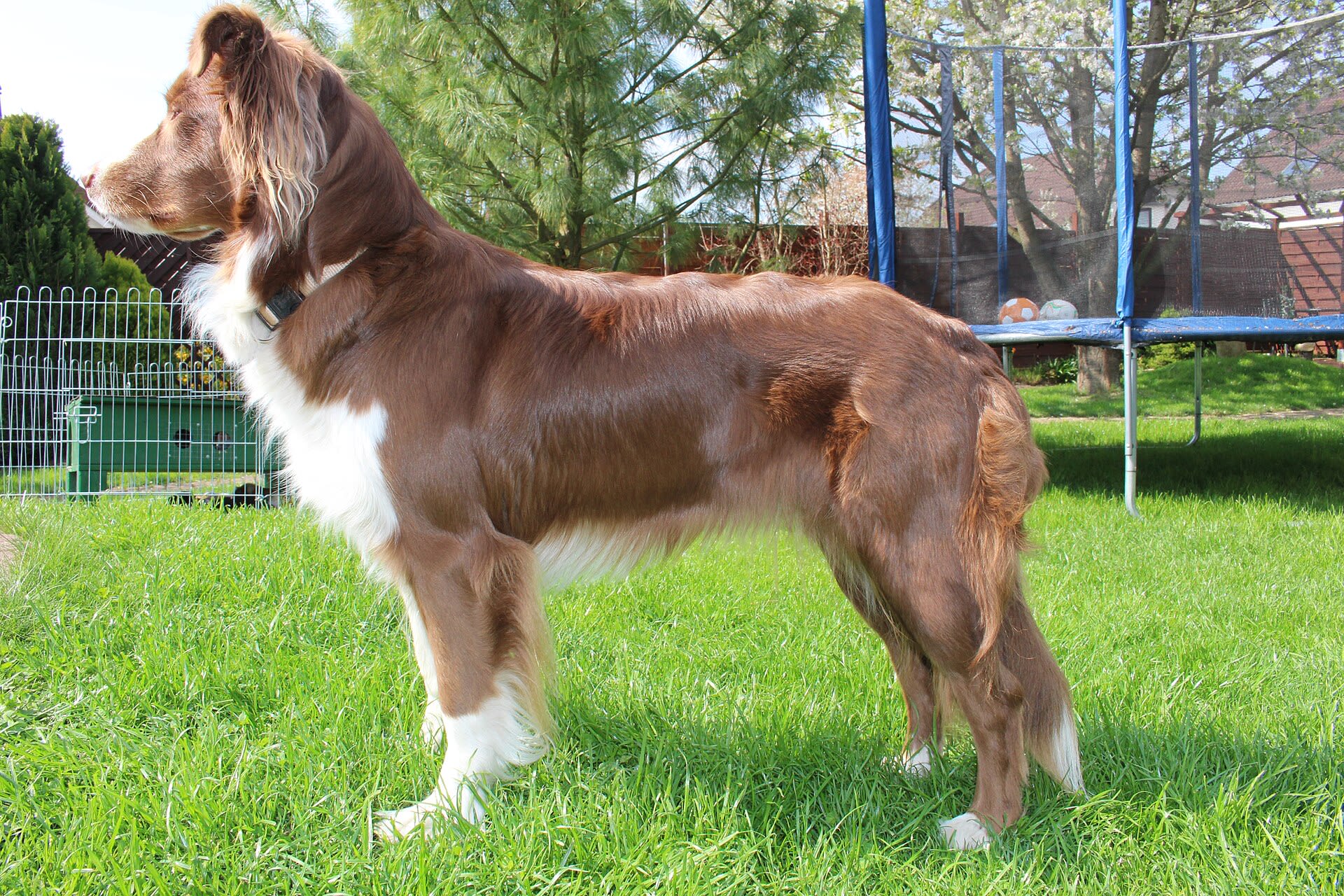
Photo: Jean-Pol GRANDMONT, CC BY 4.0, via Wikimedia Commons
Breed guide
English Cocker Spaniel
A cheerful, affectionate gundog with a wagging tail, soft ears and a nose that never stops working.
Published by Admin · Updated
- Size
- medium
- Weight
- 26–34 lb
- Height
- —
- Lifespan
- 12–15 years
- Merry
- Gentle
- Eager to please
At a glance: Medium (26 to 34 lb) · Active · Kids: very good · 12 to 15 years · Grooming: brush several times a week, regular trims
Temperament
English Cocker Spaniels are friendly, sensitive and eager to please, which makes them easy to love and generally good with children and other pets. Bred to flush game, they follow their nose with great enthusiasm, so recall training and a secure lead matter on walks.
Daily life
Expect an hour or more of exercise daily, with chances to sniff, run and retrieve. Their long, silky ears and feathered coat tangle easily, so plan on regular brushing and professional grooming every couple of months. Cockers can struggle with being left alone, so build up alone time gently.
Health to watch
Ear infections are common because of the heavy, floppy ears, so check and clean them as your vet advises. Eye conditions, hip dysplasia and some inherited diseases are also seen. Keep your dog lean, because Cockers love food, and ask about health testing for puppies.
Rescue note
Cockers sometimes arrive in rescue because of grooming costs or separation distress. Adopters who enjoy walks and a daily brush often find a devoted companion.
General information, not veterinary advice.
Health notes
Ear infections are common because of the heavy, floppy ears, so check and clean them as your vet advises. Eye conditions, hip dysplasia and some inherited diseases are also seen. Keep your dog lean, because Cockers love food, and ask about health testing for puppies.
English Cocker Spaniel FAQ
How big does a English Cocker Spaniel get?
Adult English Cocker Spaniels typically weigh about 26 to 34 lb (roughly 12 to 15 kg), depending on the individual dog, its sex and its build.
How long do English Cocker Spaniels live?
English Cocker Spaniels typically live about 12 to 15 years. Good veterinary care, a healthy weight, exercise and genetics all play a part.
How much exercise does a English Cocker Spaniel need?
Expect an hour or more of exercise daily, with chances to sniff, run and retrieve. Their long, silky ears and feathered coat tangle easily, so plan on regular brushing and professional grooming every couple of months.
What health problems should I watch for in a English Cocker Spaniel?
Ear infections are common because of the heavy, floppy ears, so check and clean them as your vet advises. Eye conditions, hip dysplasia and some inherited diseases are also seen. This is general information, not veterinary advice — ask your vet about your own dog.