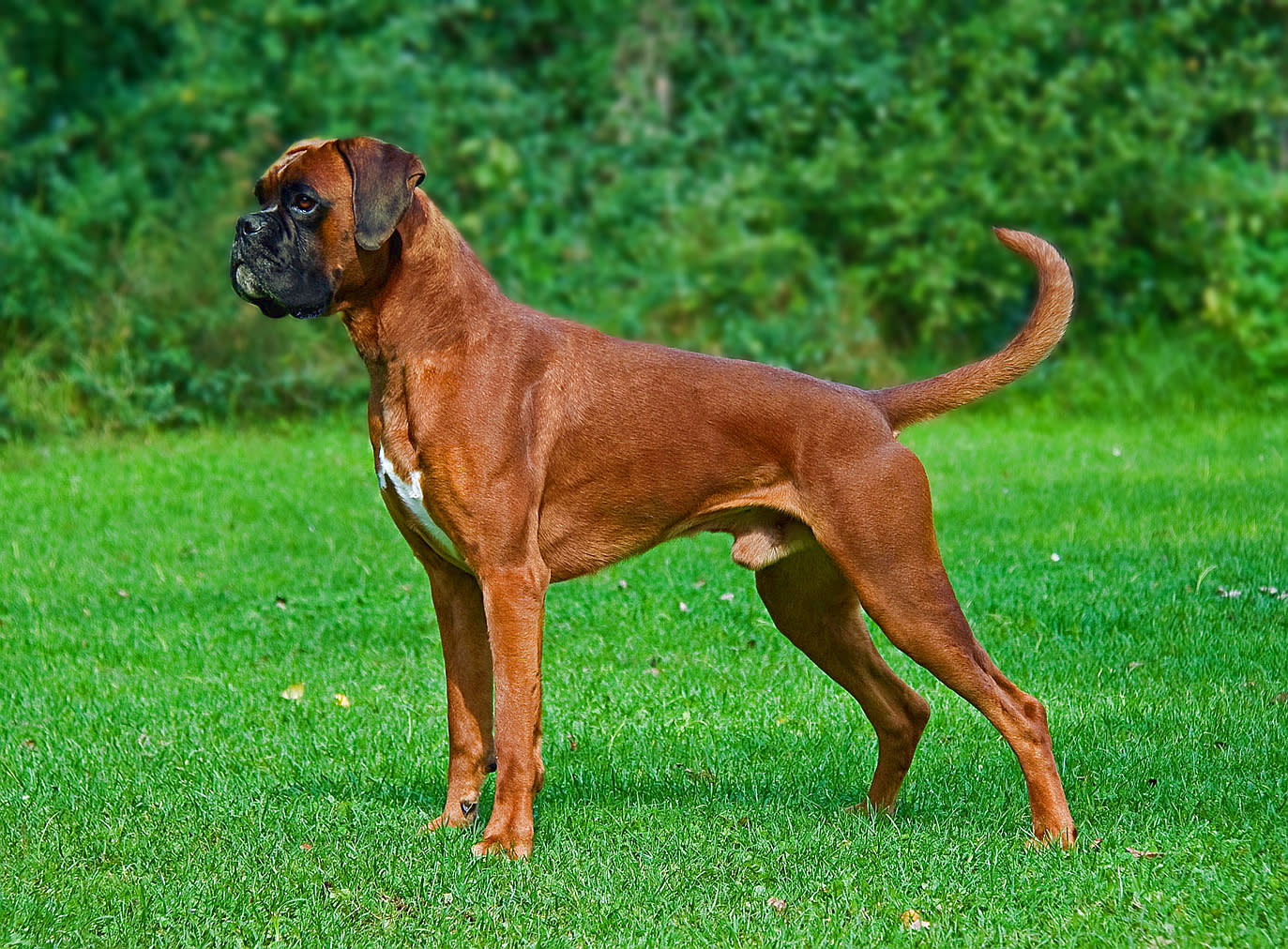
Photo: Mood210, CC BY-SA 3.0, via Wikimedia Commons
Breed guide
Boxer
An exuberant, clownish and fiercely loyal family dog that stays puppy-like for years.
Published by Admin · Updated
- Size
- large
- Weight
- 50–80 lb
- Height
- —
- Lifespan
- 10–12 years
- Playful
- Loyal
- Energetic
At a glance: Large (50 to 80 lb) · High energy · Kids: great with older kids, can be boisterous · 10 to 12 years · Grooming: low, short coat
Temperament
Boxers are known for their goofy, bouncy 'kidney bean' wiggle and a deep need to be near their family. They are alert and protective yet usually friendly, and many stay playful well into their senior years. Boxers read people closely, so they respond best to warm, consistent, reward-based training.
Daily life
Plan on an hour or more of exercise daily, split between walks, games of fetch and training. Their short muzzles make hot weather risky, so exercise early or late and provide shade and water. A bored Boxer can be destructive or boisterous, so give plenty of chew toys and puzzle feeders.
Health to watch
Boxers can be prone to certain heart conditions, some cancers, hip dysplasia and bloat, and their flat faces make them sensitive to heat. Choose a vet who knows the breed, keep your dog lean, and talk to your vet about heart screening. White-coated Boxers can be prone to sunburn and skin problems.
Rescue note
Boxers are surrendered fairly often when families underestimate their size and energy. A large garden, a sense of humour and a love of exercise make a Boxer a joyful match.
General information, not veterinary advice.
Health notes
Boxers can be prone to certain heart conditions, some cancers, hip dysplasia and bloat, and their flat faces make them sensitive to heat. Choose a vet who knows the breed, keep your dog lean, and talk to your vet about heart screening. White-coated Boxers can be prone to sunburn and skin problems.
Boxer FAQ
How big does a Boxer get?
Adult Boxers typically weigh about 50 to 80 lb (roughly 23 to 36 kg), depending on the individual dog, its sex and its build.
How long do Boxers live?
Boxers typically live about 10 to 12 years. Good veterinary care, a healthy weight, exercise and genetics all play a part.
How much exercise does a Boxer need?
Plan on an hour or more of exercise daily, split between walks, games of fetch and training. Their short muzzles make hot weather risky, so exercise early or late and provide shade and water.
What health problems should I watch for in a Boxer?
Boxers can be prone to certain heart conditions, some cancers, hip dysplasia and bloat, and their flat faces make them sensitive to heat. Choose a vet who knows the breed, keep your dog lean, and talk to your vet about heart screening. This is general information, not veterinary advice — ask your vet about your own dog.